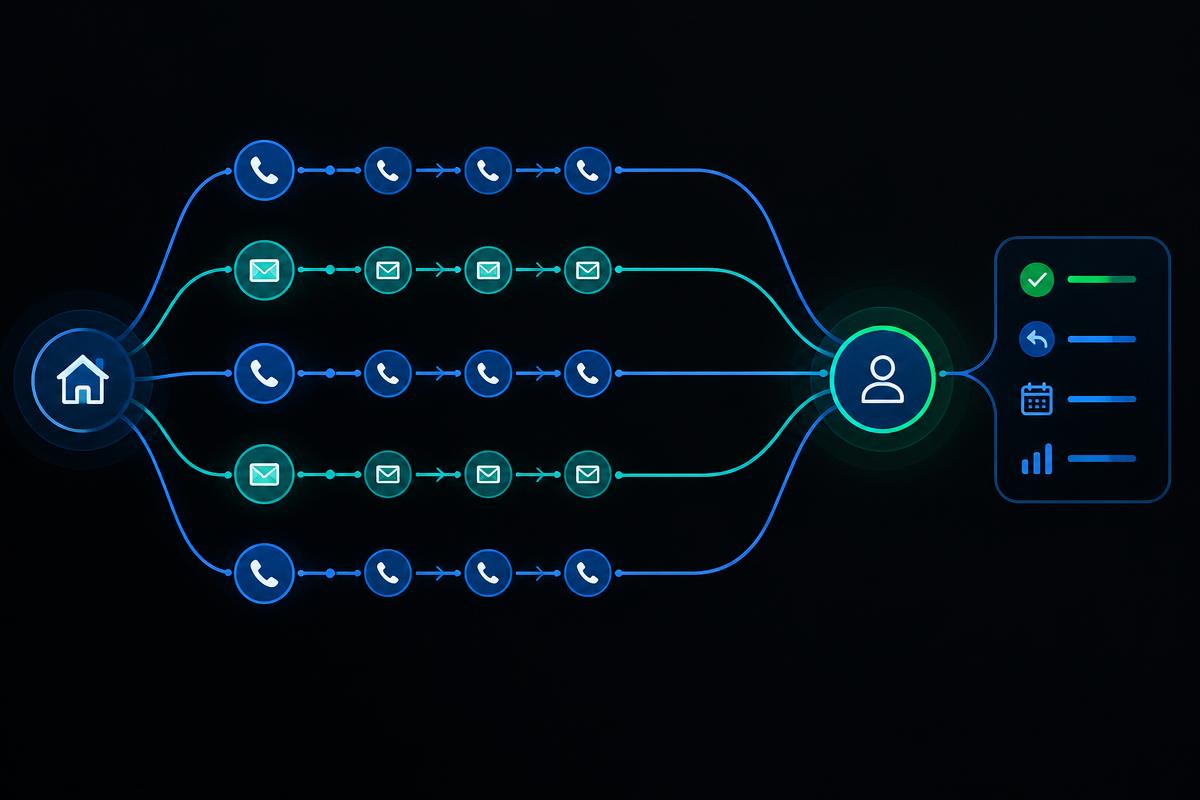
Consistency beats intensity
Six planned touches over fourteen days will outperform twelve frantic touches in two days followed by silence. The point is to be present when the borrower is ready, not to be loud when you are.
Give each touch a job
One confirms. One offers a time. One answers the objection you hear most. One shares proof. One closes the loop with a direct question. Nothing exists just to "check in".
Know when to stop
A defined stop point protects your time and your reputation. Move the record to long-term nurture and let the campaign do the reminding.
Map sequences to borrower moments
A new inquiry, booked appointment, no-show, document delay and long-term prospect should not receive the same messages. Build a small sequence for each event with a clear goal: connect, prepare, recover, clarify or educate.
Use the information the borrower already provided. Refer to the purchase timeline or requested scenario without placing sensitive data in an unsecured message.
A useful fourteen-day rhythm
An illustrative rhythm might combine an immediate confirmation, a prompt human call, a same-day text, a next-day email answering a common question, another call attempt, proof or education, and a close-the-loop message. Timing and channel require consent and compliance review.
The sequence should stop or branch as soon as the borrower replies, books, opts out or becomes ineligible. Continuing automated nudges after a live conversation makes the operation feel disconnected.
Write messages that earn a response
Replace ‘just checking in’ with a useful reason: confirm a detail, offer two times, answer a likely concern or explain the next step. Keep messages brief and identify the sender and company clearly.
Templates should leave room for human notes. A producer who can see the original answers, prior messages and last action can sound informed without writing every contact from scratch.
Measure sequence contribution
Track reply, contact, appointment, held-call and opt-out rates by sequence and touch number. The goal is not to maximize sends. It is to discover which contacts help the right borrowers continue.
Review unanswered records and replies qualitatively each week. If prospects repeatedly ask the same question, improve the message or landing page rather than adding another reminder.